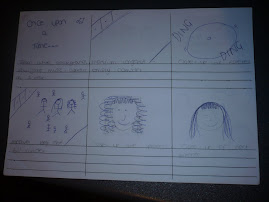
Tuesday 3rd November: 5th lesson, 1:30pm - 3:00pm (Establishing shots,Empty corridor shot, Close up of firebell and Busy corridor with pupils from school)
Thursday 5th November: 1st lesson, 8:30am - 12:00pm (Cutting hair sequence shot with Ashley, Charlotte and Zoe)
Sunday 8th November: 2:00pm - 4:30pm (All the girls doing the extreme close up of them all saying the prince's name)
Sunday 15th November: 2:00pm - 4:30pm (Ashley, Charlotte and Zoe fight scene and car scenes, Close ups, Falling over shot and walking away shot)
Thursday, 12 November 2009

Audience
Does It Have An Audience?
For every film trailer you have to consider a target audience. Since i am focusing on the theme of a Fairytale Romantic Comedy, I have a small range of target audience. One of the reasons we chose the theme was because of the fact it is a very popular genre to children, also, we thought a lot about who we would want as our target audience and who we are able to relate to, like our little brothers and sisters.We have decided to focus on people at the age of 8 years old to the age of 18 as our audience as it will be a lot easier.The actors in our video are going to be wearing modern clothing like jeans, tops dresses which are fashionable. By creating a film teaser we have to make sure that it is aimed at the target audienceand that we meet the audiences attention and keep it throughtout the video otherwise the marketing part of our film will not sell as we would hope it would.
For every film trailer you have to consider a target audience. Since i am focusing on the theme of a Fairytale Romantic Comedy, I have a small range of target audience. One of the reasons we chose the theme was because of the fact it is a very popular genre to children, also, we thought a lot about who we would want as our target audience and who we are able to relate to, like our little brothers and sisters.We have decided to focus on people at the age of 8 years old to the age of 18 as our audience as it will be a lot easier.The actors in our video are going to be wearing modern clothing like jeans, tops dresses which are fashionable. By creating a film teaser we have to make sure that it is aimed at the target audienceand that we meet the audiences attention and keep it throughtout the video otherwise the marketing part of our film will not sell as we would hope it would.
Wednesday, 4 November 2009
Tzvetan Todorov's Theory
Todorov developed the theory of disrupted equilibrium (balanced)
He identified that stories follow a typical pattern:
- Equilibrium
- Disequilibrium
- Equilibrium
This applies equally well to film texts.
Equilibrium: The 'status quo' where things are as they should be.
Disequilibrium: The 'status quo' is disrupted by an event.
Equilibrium: Is restored at the end of the story by the actions of the hero.
What is the equilibrium at the beginning of a crime genre or horror genre film?
- Attack
- Murder
- Robbery
How and when is equilibrium restored in a crime film / a horror film?
- Crime solved
- Monster dies
There can be several moments in the plot where resolution of equilibrium takes place, for example: when pieces of the detectives puzzle fall into place.
Todorov later developed this into 5 stage patterns:
- A stage of equilibrium at the outset.
- A disruption of the equilibrium by some action.
- A recognition that there has been a disruption.
- An attempt to repair the disruption.
- A reinslatement of the equilibrium.
Roland Barthes: French Theorist
Barthes believes that there are 5 action codes that enable an audience to make sense of a narrative:
- Hermeneutic (narrative turning-points) we know where the story will go next.
- Proairtic (basic narrative actions) eg: detective interview suspect or femme fatale seduces hero (see Propp's 31 functions)
- Cultural (prior social knowledge) eg: our attitudes to gender or racial stereotypes.
- Semic (medium- related codes) intertextuality
- Symbolic (themes) Iconography or a theme such as 'image versus reality' (Curtis Hanson)
Claude Levi-Strauss: French Structuralist 1970's:
Claude Levi-Strauss is most noted for his theory of Binary oppositions. In order to find those oppositions, Levi-Strauss was less interested in:
- Syntagmatic relations: eg: how events line up in the narrative structure to develop the plot.
More intereseted in:
- Paradigmatic relations: eg: those events and features that belong to the theme of the piece, especially within genre based texts.
Levi-Strauss used the 'Western' film genre to develop his theory of Binary oppositions:
- Homesteaders - Native Americans
- Christians - Pagan
- Domestic - Savage
- Weak - Strong
- Garden - Wilderness
- Inside Society - Outside Society
Levi-Strauss used the 'Western' film genre to develop his theory of Binary oppositions:
- Detective - Villian
- Princess - Femme Fatale?
- Straight - Criminal
- Weak - Strong
- Safe Streets - Mean Streets
- Sane - Mad
- Poor <<<<<<<<<>>>>>>>> - Rich
(Could Be Either Way)
He identified that stories follow a typical pattern:
- Equilibrium
- Disequilibrium
- Equilibrium
This applies equally well to film texts.
Equilibrium: The 'status quo' where things are as they should be.
Disequilibrium: The 'status quo' is disrupted by an event.
Equilibrium: Is restored at the end of the story by the actions of the hero.
What is the equilibrium at the beginning of a crime genre or horror genre film?
- Attack
- Murder
- Robbery
How and when is equilibrium restored in a crime film / a horror film?
- Crime solved
- Monster dies
There can be several moments in the plot where resolution of equilibrium takes place, for example: when pieces of the detectives puzzle fall into place.
Todorov later developed this into 5 stage patterns:
- A stage of equilibrium at the outset.
- A disruption of the equilibrium by some action.
- A recognition that there has been a disruption.
- An attempt to repair the disruption.
- A reinslatement of the equilibrium.
Roland Barthes: French Theorist
Barthes believes that there are 5 action codes that enable an audience to make sense of a narrative:
- Hermeneutic (narrative turning-points) we know where the story will go next.
- Proairtic (basic narrative actions) eg: detective interview suspect or femme fatale seduces hero (see Propp's 31 functions)
- Cultural (prior social knowledge) eg: our attitudes to gender or racial stereotypes.
- Semic (medium- related codes) intertextuality
- Symbolic (themes) Iconography or a theme such as 'image versus reality' (Curtis Hanson)
Claude Levi-Strauss: French Structuralist 1970's:
Claude Levi-Strauss is most noted for his theory of Binary oppositions. In order to find those oppositions, Levi-Strauss was less interested in:
- Syntagmatic relations: eg: how events line up in the narrative structure to develop the plot.
More intereseted in:
- Paradigmatic relations: eg: those events and features that belong to the theme of the piece, especially within genre based texts.
Levi-Strauss used the 'Western' film genre to develop his theory of Binary oppositions:
- Homesteaders - Native Americans
- Christians - Pagan
- Domestic - Savage
- Weak - Strong
- Garden - Wilderness
- Inside Society - Outside Society
Levi-Strauss used the 'Western' film genre to develop his theory of Binary oppositions:
- Detective - Villian
- Princess - Femme Fatale?
- Straight - Criminal
- Weak - Strong
- Safe Streets - Mean Streets
- Sane - Mad
- Poor <<<<<<<<<>>>>>>>> - Rich
(Could Be Either Way)
Tuesday, 3 November 2009
Applying Theory to Cinderella
I have decided to apply Propps theory to 'Cinderella', a classic disney fairytale, which has also been modernized recently into 'A Cinderella Story'. Since i am aiming to produce a modern fairytale rom com film teaser i think that applying the theory to this particular movie will build up my own knowledge of the plots of all the fairytales.
Characters:
The Villan: Cinderellas wicked stepmother and stepsisters, who both force her to become their slave when her father dies. Her wicked stepmother banishes her to the attick, where the only company she has are the animals. Cinderella is forced to cook and clean for her new vinidictive family.
The Hero:The Prince, who saves Cinderella from her imprisonment and after falling in love with her marrys her.
The Donor: Gus and Jaq, two of the main mice who Cinderella befriends. Their loyalty never falters throughout the movie, they work together to make Cinderella a beautiful dress so she can go to the ball and they also steal the key to the attick from Cinderellas wicked stepmother, in an attempt to save her.
The Helper: Cinderellas magical Fairy Godmother, who enables her to go to the ball, after her wicked stepsisters ruin her dress, she provides her with a new one, a carriage and glass slippers.
Her Father: Who loved and doted on his daughter very much, the fairytale is opened with his tragic death being revealed to the audience.
The Dispatcher: The Princes father, who encourages him in his new found mysterious love. He demands that a search for the mysterious maiden ( Cinderella ) must be conducted immediatly, and sends his most devout servant with the remaining glass slipper to find her.
The False Hero: The ugly stepsisters who try to claim the glass slipper as theirs, whilst Cinderella is locked in the attick and unable to try the slipper on and prove who she is.
Characters:
The Villan: Cinderellas wicked stepmother and stepsisters, who both force her to become their slave when her father dies. Her wicked stepmother banishes her to the attick, where the only company she has are the animals. Cinderella is forced to cook and clean for her new vinidictive family.
The Hero:The Prince, who saves Cinderella from her imprisonment and after falling in love with her marrys her.
The Donor: Gus and Jaq, two of the main mice who Cinderella befriends. Their loyalty never falters throughout the movie, they work together to make Cinderella a beautiful dress so she can go to the ball and they also steal the key to the attick from Cinderellas wicked stepmother, in an attempt to save her.
The Helper: Cinderellas magical Fairy Godmother, who enables her to go to the ball, after her wicked stepsisters ruin her dress, she provides her with a new one, a carriage and glass slippers.
Her Father: Who loved and doted on his daughter very much, the fairytale is opened with his tragic death being revealed to the audience.
The Dispatcher: The Princes father, who encourages him in his new found mysterious love. He demands that a search for the mysterious maiden ( Cinderella ) must be conducted immediatly, and sends his most devout servant with the remaining glass slipper to find her.
The False Hero: The ugly stepsisters who try to claim the glass slipper as theirs, whilst Cinderella is locked in the attick and unable to try the slipper on and prove who she is.
Vladimir Propp
Vladimir Yakovlevich Propp was a Russian formalist scholar who analyzed the basic plot components of Russian folk tales to identify their simplest irreducible narrative elements.
Vladimir Propp was born on April 17, 1895 in St. Petersburg to a German family. He attended St. Petersburg University (1913-1918) majoring in Russian and German philosophy. Upon graduation he taught Russian and German at a secondary school and then became a college teacher of German. His Morphology of the Folk Tale was published in Russian in 1928. Although it represented a breakthrough in both folkloristics and morphology and influenced Claude Lévi-Strauss and Roland Barthes, it was generally unnoticed in the West until it was translated in the 1950s. His character types are used in media education and can be applied to almost any story, be it in literature, theatre, film, television series, etc.
In 1932, Propp became a member of Leningrad University (formerly St. Petersburg University) faculty. After 1938, he shifted the focus of his research from linguistics to folklore. He chaired the Department of Folklore until it became part of the Department of Russian Literature. Propp remained a faculty member until his death in 1970.
Vladimir Propp extended the Russian Formalist approach to the study of narrative structure. In the Formalist approach, sentence structures were broken down into analyzable elements, or morphemes, and Propp used this method by analogy to analyze Russian fairy tales. By breaking down a large number of Russian folk tales into their smallest narrative units, or narratemes, Propp was able to arrive at a typology of narrative structures.
Propp's approach has been criticized for removing all verbal considerations from the analysis, even though the folktale's form is almost always oral, and also all considerations of tone, mood, character, and, anything that differentiates one fairy tale from another. One of the most prominent critics of Propp is the famous French Structuralist Claude Lévi-Strauss, who used Propp's monograph on the morphology of the Folktale to demonstrate the superiority of the Structuralist approach, and the shortcomings of the Formalist approach. (see Levi-Strauss, Claude. "Structure and Form: Reflection on a Work by Vladimir Propp"). Defenders of Propp believe that that such criticisms are largely redundant, as Propp's approach was not intended to unearth meaning in the fairy tales he examined (as may be the case with Structuralist or Psychoanalytic analysis), nor to find the elements that differentiate one tale from another, but to unearth the elemental building blocks that formed the basis of their narrative structure.
Vladimir Propp was born on April 17, 1895 in St. Petersburg to a German family. He attended St. Petersburg University (1913-1918) majoring in Russian and German philosophy. Upon graduation he taught Russian and German at a secondary school and then became a college teacher of German. His Morphology of the Folk Tale was published in Russian in 1928. Although it represented a breakthrough in both folkloristics and morphology and influenced Claude Lévi-Strauss and Roland Barthes, it was generally unnoticed in the West until it was translated in the 1950s. His character types are used in media education and can be applied to almost any story, be it in literature, theatre, film, television series, etc.
In 1932, Propp became a member of Leningrad University (formerly St. Petersburg University) faculty. After 1938, he shifted the focus of his research from linguistics to folklore. He chaired the Department of Folklore until it became part of the Department of Russian Literature. Propp remained a faculty member until his death in 1970.
Vladimir Propp extended the Russian Formalist approach to the study of narrative structure. In the Formalist approach, sentence structures were broken down into analyzable elements, or morphemes, and Propp used this method by analogy to analyze Russian fairy tales. By breaking down a large number of Russian folk tales into their smallest narrative units, or narratemes, Propp was able to arrive at a typology of narrative structures.
Propp's approach has been criticized for removing all verbal considerations from the analysis, even though the folktale's form is almost always oral, and also all considerations of tone, mood, character, and, anything that differentiates one fairy tale from another. One of the most prominent critics of Propp is the famous French Structuralist Claude Lévi-Strauss, who used Propp's monograph on the morphology of the Folktale to demonstrate the superiority of the Structuralist approach, and the shortcomings of the Formalist approach. (see Levi-Strauss, Claude. "Structure and Form: Reflection on a Work by Vladimir Propp"). Defenders of Propp believe that that such criticisms are largely redundant, as Propp's approach was not intended to unearth meaning in the fairy tales he examined (as may be the case with Structuralist or Psychoanalytic analysis), nor to find the elements that differentiate one tale from another, but to unearth the elemental building blocks that formed the basis of their narrative structure.
Applying The 31 Functions to Walt Disney's The Lion King
1. Absentation: Simba is forced to leave Pride Rock by Scar and his pack of Hyenas, their crafty plan has made Simba believe he killed his own father, and with this pain he runs away from his family and his home.
2. Interdiction: Simba is told by his father, (Mufasa) that everything the light touchs will soon be his one day when he becomes king. When Simba asks him about the 'Shadowlands' Mufasa forbids him to go there, commenting that it is dangerous this makes Simba want to visit this place even more.
3. Violation of Interdiction: Simba and Nala slip away from their homeland with Zazu, and head for the Shadowlands, where they are trapped by the Hyenas.
4. Reconnaissance: Scar decides that he must kill Mufasa and Simba in order to become King of Pride Rock.
5. Delivery: Scar sends the Hyenas away to watch on Nala and Simba
6. Trickery: Scar tells Simba that his father Mufasa needs to speak with him and leaves him on a vast area of desert, Scar then tells the Hyenas to chase Simba down the desert alongside a herd of impalas. Knowing that Simba will be in danger very soon, Scar fetchs Mufasa, who is unaware of his brothers plan. Mufasa rescues Simba, but is then killed by Scar as he throws him off a cliff and into the herd.
7. Complicity: Simba thinks himself as a dishonested lion and that he has killed Mufasa, under the encouragment of Scar.
8. Villainy and Lack: Scar kills Mufasa by throwing his brother off of a cliff he is hanging onto.
9. Meditation: Simba becomes a victimized hero and is chased away by the Hyenas, along with their threats to kill him if he dared return and the guilt he feels for what he thinks he had murdered his father, he runs from his family.
10. Beginning Counter Action: Nala accidently runs into Simba, and convinces him that his pack are nearly doomed, for Scar has taken over Pride Rock and driven it to ruin, enslaving the lioness's. Simba decides that he must return to Pride Rock and take his rightful place as king. This is a defining moment for the hero as this is the decision that sets the course of future.
11. Departure : Simba leaves the new home he has found with Timon and Pumba and sets off along with Nala and his new family to avenge his place as king.
12. First Function of the Donor : Timon and Pumba accompany Simba in his quest to Pride Rock and aid him through his battle with the Hyenas and Scar, who had taken over complete rule of the Pride Lands.
13. Hero's Reaction : Simba reacts to the actions of Rafiki.Rafiki tells Simba that he 'knows' his father and leads him through the wildlife to a secret pool, where Simba sees in his reflection, his father, Mufasa. Rafiki conjures Mufasa's spirit from the pool.
14. Receipt of a Magical Event: Simba receives advice from his fathers spirit, which convinces him that he is obligated to return to pride rock and take his rightful place as king.
15. Guidance: Simba is lead from his new home to return to Pride Rock, accompanied by Nala, Timon, Pumba and Rafiki.
16. Struggle: Simba, aided by his faithful family (Timon, Pumba, Nala, Pack of lionesses, including his mother) begin to fight with Scar who is aided by the Hyenas. Simba then goes on to battle Scar in one on one combat.
17. Branding: Simba is forced onto the edge of Pride Rock by Scar.
18. Victory: After Scar taunting him about his past, Simba admits to his family that he is the one who killed his father and their king, Mufasa and trys to assure them that it was an accident. However it is then revealed that Scar is the one who pushed Mufasa off of the cliff and to his death. Simba then goes to kill Scar, but mercifully lets him go. Scar is attacked by the Hyenas who he tried to blame for his motive for taking over the kingdom.
19. Liquidation: does not occur.
20. Return: Simba returns to the throne and his rightful place in the circle of life.
21. Pursuit: Does not occur.
22. Rescue: Simba as the hero, over-rules Scars physical power over him and has him at his mercy.
23. Unrecognized arrival: Simba left home when he was just a cub and has grown up with Timon and Pumba after running away from his past. It is serval years later when he finally returns to Pride Rock and even his mother fails to recognize him as a fully grown lion. Oly upon hearing his voice does Simbas mother truly realize that her son has returned.
24. Unfounded Claims: Scar forces Simba to admit to his family that he is the one who killed Mufasa, their beloved king. The truth is that Scar is actually the one who killed him.
25. Difficult task: Simba has to find the courage to reveal to his family what has haunted him for all this time. He then has to overcome Scar through physical strength.
26. Solution: Scar quotes ''I killed Mufasa''.
27. Recognition: Simba is recognized as the true King and heir to the throne.
28. Exposure: The pack realize that Scar is their true enemy as he killed Mufasa.
29. Transformation: Simba becomes whole as he is reunited with his family and his true place in the Circle of Life.
30. Punishment: Scar is banished from Pride Rock by Simba. However his punishment extends when he is killed by the Hyenas for betrayal.
31. Wedding: Simba marries Nala, and they are united in marriage. The happily ever after is shown by the birth of their daughter.
Another Comparasion of The Verve Music Video - Phil Collins - Two Hearts and Outkast - Hey Ya!
I also looked on youtube and found another pair of examples of conventions where the video is copying for their own devices they are Phil Collins - Two hearts and Outkast - Hey Ya!
In this video it is old fashioned you can tell this by the costumes that they are wearing also the video is in Black and White. They use old Camera Reels which they used in the traditional time.
http://www.youtube.com/watch?v=XvIw5ZqC1ms&feature=PlayList&p=1EFD8359208E6D72&playnext=1&playnext_from=PL&index=60
In this video it is old fashioned you can tell this by the costumes that they are wearing also the video is in Black and White. They use old Camera Reels which they used in the traditional time.
http://www.youtube.com/watch?v=XvIw5ZqC1ms&feature=PlayList&p=1EFD8359208E6D72&playnext=1&playnext_from=PL&index=60
Subscribe to:
Posts (Atom)