We used 3 girls and a boy in the sixth form at our school including me and Lauren Meek as the main 'Popular Girls' and Charlotte Meek as 'The Geeky Girl' within our group for this trailer, poster and magazine cover. Having us as the main characters of the trailer helped majorly with the scheduling and filming bacause we could all do the same times when it came to filming and we all took Drama as a subject which is an advantage, we also get on well with eachother which meant that none of us were left out.
'The Popular Girls'
Lauren Meek
Charlotte Piper
'Geeky Girl'
Charlotte Meek
'Prince's Mates'
Liam O'Grady
Joe Del Grosso
'The Prince'
Matt Kaal
Matt played our Prince charming as he is tall with dark hair and dark eyes. He fits with the modern day 'dreamboy' and with all these elements would capture the target audiences attention.
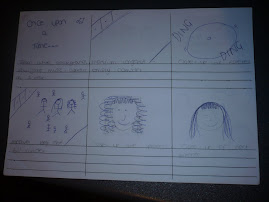
To start our trailer, in the first two shots we established the companies of our film and a certificate to say that it is approriate as this is typical in many of the trailers i have watched. We then get a medium shot of the two 'popular girls' walking together showing the stereotypical 'popular girls' in the highschool environment. This then continues with the caption reading 'They were the girls' spoke by a conventional male voice, following this the shot will go back to one of the girls sitting on top of a fence flirting with a boy until 'the one', again typical girl but also reintroducing the audience with the social status of the girls, next with the caption reading '...who always got what they wanted...'. There will then be a longshot of a guy at an office desk, he will then walk out of the office changing the shot so he is now facing the camera. With this he ignores the two 'popular girls' and we see thier reaction. To vary our shots we then see a close up of the guy followed by another caption reading 'untill...' There is then a long shot of a 'geeky girl' getting noticed by 'the guy', leading onto a close up of one of the 'popular girls' not happy that the guy noticed the 'geeky girl'. After watching a considerable amount of film trailers we realised that half way into the trailer there is a faster sequence of shots, which we decided to include in our trailer. Throughout this there are a range of shots still keeping the variety in the trailer. This is followed by another caption 'From the makers of....'. Finally we end the trailer with the title 'He's mine' and also the time the film comes out going with the conventions, but to give it a twist we have a clip of 'the guy' brushing his hair back inbetween the last two captions and also leave it on a cliffhanger. Throughout all of the trailer we have included a variety of effects, music and transitions.
As a group we decided to change our final piece. I am improving my film as we had a very unclear and complicated storyline which our audience found confusing and did not follow the sequence. With all this in mind we looked again at different film trailers to ones we looked at before and we have altered our storyboard. For better options we kept our actors but changed one girl as one of our actors could not come to an agreement on the times and dates of our fimlimg. By using the same actors i feel that it will simplify the new storyline as we know that they are reliable and that they can all work together in a short amount of time.
1. In what ways does your media product use, develop or challenge forms and conventions of real media products?
From research and analysis as a group we decided that it was essential to use various forms of conventions that are typically linked to a fairytale. We also had to include modern conventions to capture modern audiences attention and convey the setting of the film.
One of the main areas we focused on was the captions. We decided that due to our modern setting, costumes and general mise en scene which conveys the typical romantic comedy genre, we would need to portray to the audience the fairytale like storyline. We used these in chronological order to illustrate the individual storyline to the audience and capture their interest in the twisted modernized fairytale. Whilst analysing other film trailers which genres parallel our attention was captured by a particular open sequence which is in both 'Ella Enchanted' and 'A Cinderella Story' which are also both well known successful adaptations of classic fairy tales.
The narrators both begin with the fairy tale line of a book 'Once upon a time..' which is a stereotypical convention of a fairytale and implies this genre to the trailer. We decided to use this opening as our own and like in Ella Enchanted, inserted the captions upon a story book. Instead of using typical fairy tale images for all of our pictures accompanying the captions, we took a selection of images of our actors to use. By doing this we aimed to create a contrast between the fairytale genre and modern pictures, which would keep our trailer different to average film teasers and make it more interesting for our viewers.
The plot is another example of how we followed a typical romantic comedy genre. From analysis of modern trailers such as 'A Cinderella Story' and 'Mean Girls' and 'Failure To Launch' we were able to determine a typical exciting plot with some characters which paralleled to Propp's theory. The setting is one form of convention which we did challenge, as we only filmed in one key location for the majority of the shots which was at our school. However we did this not out of convenience but to again capture our target audiences attention, as they have spent the majority of their lives at school and this is a setting they we can relate to. It could be understood by some that by using one main location it would be a disadvantage and so we decided to also film in a variety of other locations, such as: at a park, bus stop, roads, and many more. Within the trailer the majority of our shots are at school as we felt that this was important for the target audiences attention as the specific location kept the plot simple and understandable. We also decided to use a variety of shots such as: close ups, medium shots, long shots, bird eye view shot, this helped us to keep our film teaser which are used in this present day and keep the audiences attention throughout the trailer. One example of a shot that we used was a close up of the popular girl not getting her way and that her enemy has taken her Prince Charming away from her. We used this shot to show the viewers that the character was unhappy and angry with the princess. By showing an angry face we made the character push up one eyebrow which worked extremely well.
2. How effective is the combination of your main product and ancillary texts?
We decided that by keeping a consistent theme between all three of our products, our trailer would be more recognizable and memorable to our target audience. Each product contains obvious parallels between them, such as the title 'Hes Mine' in the same text and colour and also the images with the main characters which appear in both the poster and the magazine front cover as well as the film trailer. Having the characters relate to the audience will gain the viewing. We completed our trailer first and then decided to create some sketch's of initial ideas of poster and magazine layouts. We also brainstormed several ideas of images to appear on the poster and front cover of our magazine which would help the typical teenage Romantic Comedy plot. To extend the link between the teaser trailer and our other products, as a group we came up with a logo which was a heart shape which was used in all our final pieces. Overall, I feel that as a group we successfully created a lot of consistency in our piece which was our target as we felt that it was important for the audience to be able to link each of our different advertisements.
3. What have you learned from your audiences' feedback?
I have learnt a lot from my audiences feedback, that as a group, we posted our final production pieces on Youtube in the understanding that we would recieve some critical and benificial feedback. Our audience felt we had a very interesting storyline and were eager to find out the ending. Even though some of our critics felt that some of the narrative captions didn't make sense with the voice over but they were only able to understand it from the written captions itself making our production successful. Narrative appears to attract the viewers to want to go and see this film. Other critics commented on the modern twist to a fairy tale and quick changing shots, this then made the final outcome more exciting and interesting. Even though the main purpose of all our shots was the location of the school some people felt a wider range of locations were needed and that it may have been useful to have carried out different surveys for this, by asking our target audience which locations we could have taken in account for future reference.
Stereotypical fairytale setting, although an unrealistic location for filming.
A modern setting, in London which could've been applied to the plot.
4. How did you use media technologies in the construction and research planning and evaluation stages?
I used YouTube to find examples of particularly effective teaser trailers with a similar genre to our theme, of a typical convention which i felt would capture the target audiences attention. I posted these on my blog and carried out focused in depth analysis's of my personal favourites in order to get a wide knowledge of the typical conventions used within these trailers.
I also concentrated on Costume, Setting, Narrative and Mise En Scene to help inspire me in my own ideas and adaptations of different targets of the teaser. Whilst we didn't want to reuse any of the previous trailers used, we analysed a wide variety of trailers and wrote down their effective techniques i felt that we could combine and create a plan for our own trailer. I posted these on my blog and used it as a sort of diary extract to note down all my research into theory, existing pieces of media which relate to our products and the planning of our own product. By using the blog i had a clear list of all these things that could relate back to them in the planning and evaluation of the final three products. I also used YouTube to post our final product in an attempt to receive some critical and positive feedback.
We were also given the resources in order to edit and complete our final products. For this stage in our assignments, we used the Macs variety of programs to suit each of our products.
Photoshops effective tools enabled us to edit these quite easily and also to add particular individual effects to our pieces, such as the logo which we found on the 'shapes' tool, or to clone part of an image to the background as we liked the colour better than the background.
Firstly we used Photoshop to edit our captions for the trailer and to edit and complete the majority of our poster and magazine front cover. The images we used for these covers were taken by a camera. We used a tripod in order to take the best shots we could. We also used lighting in our Drama department in our school as this helped to improve the images we were taking and provided us a simple effective backdrop. All of these contained a variety of different layers, from tag lines to titles in the front cover of a Magazine and Poster, to the narrative and logos included in the captions.
To focus on the editing, we used Premier Pro, which allowed us to edit, cut and erase any footage we had taken. Through Premier Pro we added a series of effects to our trailer, such as the turning of pages as the storybook changes to the shots we had the sound effect of a book turning a page. Premier Pro also allowed us to speed up shots, slow them down or even rewind the shots among many other effective tools. As a group we also debated using some magical effects which would emphasize on the fairytale twist, as well as the captions. However due to timing we did not know whether this would be possible and wanted to focus on finishing our final three products first as these effects weren't a convention we planned on using. Tripods and video cameras were also used in filming the footage for our teaser, we tried to ensure as much filming time as possible as we felt that the shots involved were more important to creating a successful trailer than the actual storyline but still keeping it as close to the stortline as possible as the shots on the trailer are what capture the attention of the audience.
Overall the use of media technology used within our planning, research and evaluation of our products was essential as it allowed us to carry out in depth analysis, note this down chronologically and edit our products to maximum potential.
I've started off by analysisng the 'Love Actually' film poster, the first thing that is obvious about it by just looking at it is the fact that this film is obviously a festive film, made clear by the fact snow has been included and the fact the pictures are layed out in a gift wrap style. Also the colours used in this poster are very similar to the traditional colours used at christmas. Each of the pictures included of the cast, are very interesting. Each one has its own individual style or expression. By including each of their names under their pictures, a sense of personality is added, immediately we know who each of the actors/actresses are if the pictures didn't make it clear enough. The font used, along with the coors of them, adds a simplistic sense but still contrasts well with the rest of the poster. A simplistic color scheme and a simple font helps to make this poster effective in presenting this film and what it is about. However, i don't think it is clear what genre this film is, although it has a festive feel and mainly the color red is used (which represent love) i don't think it is obvious to the viewer what genre this film actually is, not from the film poster anyway. The title; 'Love Actually' is the only thing that makes it clear this film is indeed a romantic comedy. An effective film poster, but in my opinion, it would benefit from being a little less busy and a bit more clear.
This film is based on a modern fairytale. The house in which Cinderella lives in accompanied by her Step-Mother and her two Step-Sisters. The colour scheme that is used adds to the sunny lanscape of Los Angeles and the whites and browns go well together. The characters costumes and style contrasts with the hosue and fits in well with the genre of modernised fairytale. The house is shown that the family are a well off family, but compare the house to the size of Cinderella's room and has shown how she is very deprived. The garden includes a swimming pool and a sunbed.
The Cafe where Cinderella works is included in the trailer but not also does it show that she comes from a well off family she still has too work for herself and earn her own living spences. The round tables add a friendly atomosphere and aswell have the counter running the whole way around the Cafe, this also makes the Cafe look stylish with the tiled floors coloured black and white which is very 80's style.
Another Main location used in this film is the school. It is used for many things such as: A School (with lessons), A Prom, A Football Match. It is a romantic environment as it is common for teenagers to fall in love at school and meet there one true love. By including this location most of the target audience can relate to the story and engage more to the film. In the school is a shot of the library and how Cinderella spends most of her time in there talking to her 'Prince Charming' Via the computor on an internet site, which adds to the mystery. She is also shot in the library doing her work which shows the audience that she is smart and wants to well later on in life.
Also featured is the batting cage where Cinderella works on her baseball skills. This location is used as her personal space as earlier on in the story we are told that she used to play there with her dad before he was killed. The cage she is in perhaps represents the fact she feels trapped and this is the only place she feels she can let off steam.
Like every fairytale eneding the Princess always gets the Prince. The location is in the ball what we call a prom. The lighting used adds to the romantic feel and the location seems to be well style and fits the narrative well. The colour scheme used in this location adds to the enchanted feel of the ball and also adds a formal appeal to this scene. When the camera moves outside, into the garden, an arch comes into shot decorated with white flowers and beautiful lighting which sets the scene off nicely. The white fencing ties in with the white flowers which compliments the whole scene well. The fairy lights composition seem to get more compact as the camera drops down to reveal a the bottom of the arch. Overall creating a fairy tale like location.
We decided for our film trailer to be based around our school as it would be a familiar setting to our target audience and one in which they can relate to. We did use other locations such as parks and shopping centres but our shots are largly around school. Our main establishing shot was a school corridor, with this we filmed in different corridors around school as we had to make sure the lighting was at the correct levels.
This trailer opens with a caption featuring a typical opening of a fairy tale "Once Upon A Time" this is conventional of many fairy tales and adds a classic appeal. The soundtrack will feature an enchanted magical tune which will cut to a more up beat tune when the next shot appears which shows the viewer immediately that this isn't a classic fairy tale that they have come to expect, it in fact has a modern twist to it. The next shot is a medium long shot of an empty school corridor, still with an upbeat tune in the background. This is an establishing shot and shows the viewer that this trailer is indeed set in a modern day school. A close up shot of a school bell ringing to singal the end of second lesson then appears on screen. This again, empahasises the fact that this trailer has got a modern edge to it. A medium long shot of the school corridor then appears again featuring groups of students and a busy corridor appears. This shows the bussling feel of any school. The camera zooms in to three girls, the modern princesses, who appear on screen (played by Ashley Finch,Charlotte Meek and Charlotte Piper ).The camera films as the walk through the corridor, then cuts to various close-ups of the individuals. This is done in order to allow the audience to connect with the characters featured. Another caption then flashes up on screen; "They're The Girls Everyone Want To Be.." again this is presetned on a plain background with a fairytale tune, after this another caption, "Until.." , again with conventional music and a plain background. A close-up of the male lead character (played by Matt Kaal) appaears on screen. He proceeds to walk in slow motion up to the camera past Ashley, Charlotte and Cahrlotte. The next shot is split into a 3 way shot in order to show each character in different locations on the phone in the same camera shot. This is put in, in order to allow the viewer to see the three girls are friends but are all after one boy. Following this, a close up three way shot of each of their lips is included in order to add variety. Yet another caption apears, "This Summer", followed by a tracking shot of Charlotte walking along the corridor towards the prince only to fall over and land on the floor in front of him. Then a close-up shot of the Matt, from Charlotte's point of view, appears with the added effect of being blurry to show that Charlotte fell over and hit the floor hard enough to knock herself out. The camera then changes to Matt's point of view looking down at Charlotte, she then looks up realizing its Matt and shows herself to be very embarrassed. Another caption appears,"They're In It To Win There Prince Charming..", Now, to a different location, outside of school. Medium long shot of car with Matt and Charlotte Meek in pulling up outside of school. Charlotte and Ashley look on-obvious they are not happy about it, shown with a close up of each of them. Camera shoots to a classroom environment with a close up of a hand with scissors featured. Then flashes to Charlotte Piper cutting off Charlotte Meek's hair, over shoulder shot of Charlotte Piper holding the piece of hair. Charlotte then launches herself over the desk, shown in a medium close-up Ashley as she goes to attack Charlotte. The title then flashes up on screen then a final medium close-up of Matt walking in front of the girls, all three looking at him as he walks away, Matt then says, "Let The Games Begin". Final caption pops up containing information such as the release date; "In 2010" then "Who Will Get Their Happy Ever After?".
This is a mood board which shows different examples of images which give a romantic feel to them. They show all images which are taken from rom coms and other 'chick flick' films.
A Cinderella Story'
The trailer starts off with fairy tale music to go along with the establishing shot. This has been done in order to introduce this film as a fairy tale, when the twist in this story becomes obvious it is more of a surprise to the audience (Loz Angeles). To go long with the ambient soundtrack there is a voice over the top. This voice tells the story in a traditional way therefore it is adding to the fairy tale theme.
When the camera changes to a shot of Los Angeles, the music changes and its no longer the traditional type instead it changes to a more upbeat sound (which is Hilary Duff singing). this has been done in order to show the change of narrative, to show the viewer that this story line isn't traditional in the sense that this one is based in a modern day setting. Also, just before the music changes, a musical effect has been added in in order to show that the soundtrack is going to change to a different type of sound.
Each shot, generally, seems to include a voice over and the characters speaking. When the shot changes from one to another a sound effect has been added which sounds as if a page is being turned. This has been done to, again add variety to the shot, and also give the impression that this story is being read out of a fairy tale book.
Whilst playing baseball, the main female character whose representing a 'princess', hits the ball really hard sending it over to where the modern 'prince is. The ambient soundtrack goes from gentle quiet background music to a loud dramatic soundtrack to express her victorious hit. This adds the fact that she is skilled at the sport baseball.
At the ball, when the 'Princess' appears in the shot, the music changes to a enchanted soundtrack to express the fact she has developed into a beautiful woman. This is carried on after the voice overs from the characters when the camera shoots to the dancing outside, the fact that for the first time a soundtrack is used which includes lyics. This has been done because there is no voiceovers from this point onwards. The lyrics of this song also link to what is going on in this scene and what is going on overall in the story line.
For my focused analysis on characters i decided to look at the characters used in popular trailers. I have chosen to look at the 'A Cinderella Story' as i feel this links in well with my chosen genre. Since this film is based on a modern version of a fairy tale, Cinderella, each of the characters have a similar appeal that the original characters have.
The character modeled to be like cinderella, is obvious from the start of this film trailer. She first comes into shot wearing ordinary clothes, nothing that stands out which is how Cinderella starts off in the original fairy tale. Also, the modern cinderella is shown working in a cafe, scrubbing the floor and acting as a waitress which again fits in nicely with the original story where she is a slave to her step-mother, technically she is too in the modern version as the step-mother is the one who owns the cafe. This character also has appearance similarities to that of the original cinderella, for example the blonde hair tied up and out of her face, also her striking blue eyes which conventionally fits in with many fairy tales like Sleeping Beauty.
The female character who plays the step-mother. She has been made to look like a modern American mother with a selfish side which links nicely to the original story. She has been made to seem jealous of the main character, Cinderella, which again fits in with the original fairy tale. Throughout the story she is made to seem as if she is in control and also made to seem as if she is the boss. As well as this, throughout the film, she is made to seem vein which is shown by the fact she gets botox in the film, Thus, following the conventions of a step-mother in many films and fairy tales. Also, the clothes she wears throughout this film, seem to be modern versions of the clothes worn in the fairy tale. This has been done to add a modern feel to this film.
Eventually, Cinderella's happy ending starts to come together when she attends the school prom wearing a prom dress which fits in with the character nicely, and also the conventional characters in fairy tales who always get their happy ending. Also her personality in this film is similar to how Cinderella in the original fairy tales is. She is kind, loving and caring which is conventional of many fairy tale princesses.
Finally, the Prince. He has been portrayed as the 'popular' character with a lot of friends who hang around with the ' right ' people, they guy who has the pick of the girls. His exterior character is portrayed as having everything but as the story goes on the viewer discovers that he is looking for his princess and his happy ending as well. Perhaps unconventional of a fairy tale, is the fact his character has short blonde hair as opposed to long blonde hair which many princes are portrayed to have. This has obviously been done to give this story a modern edge. The clothing he wears in this film is quite simplistic, he has been styled in average dress with a slight edge, i.e rolled up sleeves or jeans with original sneakers. Also, whilst at the fancy dress ball, the 'prince' actually turns up dressed as a prince were as his two friends turn up looking like his henchmen-obviously been done to portray the fact he has turned up to save the princess from her life of misery.
Tuesday 3rd November: 5th lesson, 1:30pm - 3:00pm (Establishing shots,Empty corridor shot, Close up of firebell and Busy corridor with pupils from school)
Thursday 5th November: 1st lesson, 8:30am - 12:00pm (Cutting hair sequence shot with Ashley, Charlotte and Zoe)
Sunday 8th November: 2:00pm - 4:30pm (All the girls doing the extreme close up of them all saying the prince's name)
Sunday 15th November: 2:00pm - 4:30pm (Ashley, Charlotte and Zoe fight scene and car scenes, Close ups, Falling over shot and walking away shot)
Does It Have An Audience?
For every film trailer you have to consider a target audience. Since i am focusing on the theme of a Fairytale Romantic Comedy, I have a small range of target audience. One of the reasons we chose the theme was because of the fact it is a very popular genre to children, also, we thought a lot about who we would want as our target audience and who we are able to relate to, like our little brothers and sisters.We have decided to focus on people at the age of 8 years old to the age of 18 as our audience as it will be a lot easier.The actors in our video are going to be wearing modern clothing like jeans, tops dresses which are fashionable. By creating a film teaser we have to make sure that it is aimed at the target audienceand that we meet the audiences attention and keep it throughtout the video otherwise the marketing part of our film will not sell as we would hope it would.
Todorov developed the theory of disrupted equilibrium (balanced)
He identified that stories follow a typical pattern:
- Equilibrium
- Disequilibrium
- Equilibrium
This applies equally well to film texts. Equilibrium: The 'status quo' where things are as they should be. Disequilibrium: The 'status quo' is disrupted by an event. Equilibrium: Is restored at the end of the story by the actions of the hero.
What is the equilibrium at the beginning of a crime genre or horror genre film?
- Attack
- Murder
- Robbery
How and when is equilibrium restored in a crime film / a horror film?
- Crime solved
- Monster dies
There can be several moments in the plot where resolution of equilibrium takes place, for example: when pieces of the detectives puzzle fall into place.
Todorov later developed this into 5 stage patterns:
- A stage of equilibrium at the outset.
- A disruption of the equilibrium by some action.
- A recognition that there has been a disruption.
- An attempt to repair the disruption.
- A reinslatement of the equilibrium.
Roland Barthes: French Theorist
Barthes believes that there are 5 action codes that enable an audience to make sense of a narrative:
- Hermeneutic (narrative turning-points) we know where the story will go next.
- Proairtic (basic narrative actions) eg: detective interview suspect or femme fatale seduces hero (see Propp's 31 functions)
- Cultural (prior social knowledge) eg: our attitudes to gender or racial stereotypes.
- Semic (medium- related codes) intertextuality
- Symbolic (themes) Iconography or a theme such as 'image versus reality' (Curtis Hanson)
Claude Levi-Strauss: French Structuralist 1970's:
Claude Levi-Strauss is most noted for his theory of Binary oppositions. In order to find those oppositions, Levi-Strauss was less interested in:
- Syntagmatic relations: eg: how events line up in the narrative structure to develop the plot.
More intereseted in:
- Paradigmatic relations: eg: those events and features that belong to the theme of the piece, especially within genre based texts.
Levi-Strauss used the 'Western' film genre to develop his theory of Binary oppositions:
- Homesteaders - Native Americans
- Christians - Pagan
- Domestic - Savage
- Weak - Strong
- Garden - Wilderness
- Inside Society - Outside Society
Levi-Strauss used the 'Western' film genre to develop his theory of Binary oppositions:
I have decided to apply Propps theory to 'Cinderella', a classic disney fairytale, which has also been modernized recently into 'A Cinderella Story'. Since i am aiming to produce a modern fairytale rom com film teaser i think that applying the theory to this particular movie will build up my own knowledge of the plots of all the fairytales.
Characters:
The Villan: Cinderellas wicked stepmother and stepsisters, who both force her to become their slave when her father dies. Her wicked stepmother banishes her to the attick, where the only company she has are the animals. Cinderella is forced to cook and clean for her new vinidictive family.
The Hero:The Prince, who saves Cinderella from her imprisonment and after falling in love with her marrys her. The Donor: Gus and Jaq, two of the main mice who Cinderella befriends. Their loyalty never falters throughout the movie, they work together to make Cinderella a beautiful dress so she can go to the ball and they also steal the key to the attick from Cinderellas wicked stepmother, in an attempt to save her. The Helper: Cinderellas magical Fairy Godmother, who enables her to go to the ball, after her wicked stepsisters ruin her dress, she provides her with a new one, a carriage and glass slippers. Her Father: Who loved and doted on his daughter very much, the fairytale is opened with his tragic death being revealed to the audience. The Dispatcher: The Princes father, who encourages him in his new found mysterious love. He demands that a search for the mysterious maiden ( Cinderella ) must be conducted immediatly, and sends his most devout servant with the remaining glass slipper to find her. The False Hero: The ugly stepsisters who try to claim the glass slipper as theirs, whilst Cinderella is locked in the attick and unable to try the slipper on and prove who she is.
Vladimir Yakovlevich Propp was a Russian formalist scholar who analyzed the basic plot components of Russian folk tales to identify their simplest irreducible narrative elements.
Vladimir Propp was born on April 17, 1895 in St. Petersburg to a German family. He attended St. Petersburg University (1913-1918) majoring in Russian and German philosophy. Upon graduation he taught Russian and German at a secondary school and then became a college teacher of German. His Morphology of the Folk Tale was published in Russian in 1928. Although it represented a breakthrough in both folkloristics and morphology and influenced Claude Lévi-Strauss and Roland Barthes, it was generally unnoticed in the West until it was translated in the 1950s. His character types are used in media education and can be applied to almost any story, be it in literature, theatre, film, television series, etc.
In 1932, Propp became a member of Leningrad University (formerly St. Petersburg University) faculty. After 1938, he shifted the focus of his research from linguistics to folklore. He chaired the Department of Folklore until it became part of the Department of Russian Literature. Propp remained a faculty member until his death in 1970.
Vladimir Propp extended the Russian Formalist approach to the study of narrative structure. In the Formalist approach, sentence structures were broken down into analyzable elements, or morphemes, and Propp used this method by analogy to analyze Russian fairy tales. By breaking down a large number of Russian folk tales into their smallest narrative units, or narratemes, Propp was able to arrive at a typology of narrative structures.
Propp's approach has been criticized for removing all verbal considerations from the analysis, even though the folktale's form is almost always oral, and also all considerations of tone, mood, character, and, anything that differentiates one fairy tale from another. One of the most prominent critics of Propp is the famous French Structuralist Claude Lévi-Strauss, who used Propp's monograph on the morphology of the Folktale to demonstrate the superiority of the Structuralist approach, and the shortcomings of the Formalist approach. (see Levi-Strauss, Claude. "Structure and Form: Reflection on a Work by Vladimir Propp"). Defenders of Propp believe that that such criticisms are largely redundant, as Propp's approach was not intended to unearth meaning in the fairy tales he examined (as may be the case with Structuralist or Psychoanalytic analysis), nor to find the elements that differentiate one tale from another, but to unearth the elemental building blocks that formed the basis of their narrative structure.
1. Absentation: Simba is forced to leave Pride Rock by Scar and his pack of Hyenas, their crafty plan has made Simba believe he killed his own father, and with this pain he runs away from his family and his home.
2. Interdiction: Simba is told by his father, (Mufasa) that everything the light touchs will soon be his one day when he becomes king. When Simba asks him about the 'Shadowlands' Mufasa forbids him to go there, commenting that it is dangerous this makes Simba want to visit this place even more.
3. Violation of Interdiction: Simba and Nala slip away from their homeland with Zazu, and head for the Shadowlands, where they are trapped by the Hyenas.
4. Reconnaissance: Scar decides that he must kill Mufasa and Simba in order to become King of Pride Rock.
5. Delivery: Scar sends the Hyenas away to watch on Nala and Simba
6. Trickery: Scar tells Simba that his father Mufasa needs to speak with him and leaves him on a vast area of desert, Scar then tells the Hyenas to chase Simba down the desert alongside a herd of impalas. Knowing that Simba will be in danger very soon, Scar fetchs Mufasa, who is unaware of his brothers plan. Mufasa rescues Simba, but is then killed by Scar as he throws him off a cliff and into the herd.
7. Complicity: Simba thinks himself as a dishonested lion and that he has killed Mufasa, under the encouragment of Scar.
8. Villainy and Lack: Scar kills Mufasa by throwing his brother off of a cliff he is hanging onto.
9. Meditation: Simba becomes a victimized hero and is chased away by the Hyenas, along with their threats to kill him if he dared return and the guilt he feels for what he thinks he had murdered his father, he runs from his family.
10. Beginning Counter Action: Nala accidently runs into Simba, and convinces him that his pack are nearly doomed, for Scar has taken over Pride Rock and driven it to ruin, enslaving the lioness's. Simba decides that he must return to Pride Rock and take his rightful place as king. This is a defining moment for the hero as this is the decision that sets the course of future.
11. Departure : Simba leaves the new home he has found with Timon and Pumba and sets off along with Nala and his new family to avenge his place as king.
12. First Function of the Donor : Timon and Pumba accompany Simba in his quest to Pride Rock and aid him through his battle with the Hyenas and Scar, who had taken over complete rule of the Pride Lands.
13. Hero's Reaction : Simba reacts to the actions of Rafiki.Rafiki tells Simba that he 'knows' his father and leads him through the wildlife to a secret pool, where Simba sees in his reflection, his father, Mufasa. Rafiki conjures Mufasa's spirit from the pool.
14. Receipt of a Magical Event: Simba receives advice from his fathers spirit, which convinces him that he is obligated to return to pride rock and take his rightful place as king.
15. Guidance: Simba is lead from his new home to return to Pride Rock, accompanied by Nala, Timon, Pumba and Rafiki.
16. Struggle: Simba, aided by his faithful family (Timon, Pumba, Nala, Pack of lionesses, including his mother) begin to fight with Scar who is aided by the Hyenas. Simba then goes on to battle Scar in one on one combat.
17. Branding: Simba is forced onto the edge of Pride Rock by Scar.
18. Victory: After Scar taunting him about his past, Simba admits to his family that he is the one who killed his father and their king, Mufasa and trys to assure them that it was an accident. However it is then revealed that Scar is the one who pushed Mufasa off of the cliff and to his death. Simba then goes to kill Scar, but mercifully lets him go. Scar is attacked by the Hyenas who he tried to blame for his motive for taking over the kingdom.
19. Liquidation: does not occur.
20. Return: Simba returns to the throne and his rightful place in the circle of life.
21. Pursuit: Does not occur.
22. Rescue: Simba as the hero, over-rules Scars physical power over him and has him at his mercy.
23. Unrecognized arrival: Simba left home when he was just a cub and has grown up with Timon and Pumba after running away from his past. It is serval years later when he finally returns to Pride Rock and even his mother fails to recognize him as a fully grown lion. Oly upon hearing his voice does Simbas mother truly realize that her son has returned.
24. Unfounded Claims: Scar forces Simba to admit to his family that he is the one who killed Mufasa, their beloved king. The truth is that Scar is actually the one who killed him.
25. Difficult task: Simba has to find the courage to reveal to his family what has haunted him for all this time. He then has to overcome Scar through physical strength.
26. Solution: Scar quotes ''I killed Mufasa''.
27. Recognition: Simba is recognized as the true King and heir to the throne.
28. Exposure: The pack realize that Scar is their true enemy as he killed Mufasa.
29. Transformation: Simba becomes whole as he is reunited with his family and his true place in the Circle of Life.
30. Punishment: Scar is banished from Pride Rock by Simba. However his punishment extends when he is killed by the Hyenas for betrayal.
31. Wedding: Simba marries Nala, and they are united in marriage. The happily ever after is shown by the birth of their daughter.
I also looked on youtube and found another pair of examples of conventions where the video is copying for their own devices they are Phil Collins - Two hearts and Outkast - Hey Ya!
In this video it is old fashioned you can tell this by the costumes that they are wearing also the video is in Black and White. They use old Camera Reels which they used in the traditional time.
The Verve - Bittersweet Symphony:
This is a classic video because of all the camera angles and also because it is very simple. The most important thing about this video is the attitude towards life. At the end of this video you see 4 other people walking with him, which are his band mates, they have shown this because they all understand where Richard Ashcroft is coming from. The Verve took one step furthur and also showed an area of urban rundown, this is ironic because this is where he grew up so not is the attitude targetted at the audience the environment is also shown which i better for the marketing. The song also became famous for the legal controversy surrounding plagiarism charges. Ashcroft starts walking from the southeast corner of the intersection of Hoxton and Falkirk Streets in Hoxton, North London, subsequently proceeding north along the east side of Hoxton Street. The "pavement journey" format was inspired by the music video for the Massive Attack song "Unfinished Sympathy", in which Shara Nelson sings while walking through a Los Angeles neighbourhood. The British comedy band Fat Les would later release a direct parody for their 1998 song "Vindaloo"; Paul Kaye takes the role of an Ashcroft look-alike who is mocked by a growing group of passers-by as the video progresses.
Massive Attack - Unfinished Symphony:
This video have used ideas and conventions from The Verve's video Bittersweet Symphony. This video is important because of the setting which is also a snap shot of an urban rundown area. At the time of the release of the single, the group was pressured to change its name due to the outbreak of the Gulf War in 1991. They were briefly known as simply "Massive," and it is the name which features on the cover of this single. It features Shara Nelson walking along the sidewalk, unaware or uncaring of her surroundings, which includes drunks, gangs, bikers and the three members of Massive Attack (Robert Del Naja, Grant Marshall and Andrew Vowles). It was one of the earliest music videos to use one continuous shot. The video was later paid homage to in the music video for The Verve's song "Bitter Sweet Symphony".The art director for the video was Leigh Bowery.
Fat Les - Vindaloo:
The song was originally written as a parody of football chants, but was adopted as one in its own right and became a cult classic. Much of the song consists of the phrase "nah nah nah" and the word "vindaloo" repeated over and over by a mixed group, occasionally interspersed with lines such as "And we all like vindaloo" and "We're England; we're gonna score one more than you". However, there were rumours at the time that in a re-run of the events in 1977 surrounding the Sex Pistols "God Save The Queen" those running the chart kept "Vindaloo" off the Number 1 spot on purpose. The music video for the song is a parody of the video for "Bitter Sweet Symphony" by The Verve, which was itself inspired by the music video for "Unfinished Sympathy" by Massive Attack. The video is recorded in the same street, and features comedian Paul Kaye as a Richard Ashcroft lookalike forcing his way down the street. Unlike the original video, in which Ashcroft is alone, Kaye gradually gathers a large crowd which includes Fat Les, Edward Tudor-Pole, Matt Lucas, David Walliams, and the late Malcolm Hardee, sumo wrestlers, French maids, a French mime, a Max Wall lookalike (as Professor Wallofski), a priest, women dressed as girls from St Trinian's and many others who dance around him, some brandishing bags of curry. By the end, Kaye has joined in celebrating with the rest of the crowd.
What Is The Main Aspect Of A Film Trailer That Catches Your Attention?
Who Would You Want To Be Your Princess In A Film
What Genre of Movie Appeals To You More?
About My Blog
My name is Charlotte Piper. This is my Blogspot for my A Level Coursework. Im in a group of 4 and they are Ashley Finch, Charlotte Meek, Sarah Griffiths and I. We are making a Film Trailer and the genre we have chosen is Rom Com. We have now thought of a storyline which is based on three fairytale stories but modernised, they are; Snow White and the Seven Dwarfs, Rupunzel and Cinderella.